What is digital marketing and why is it important?
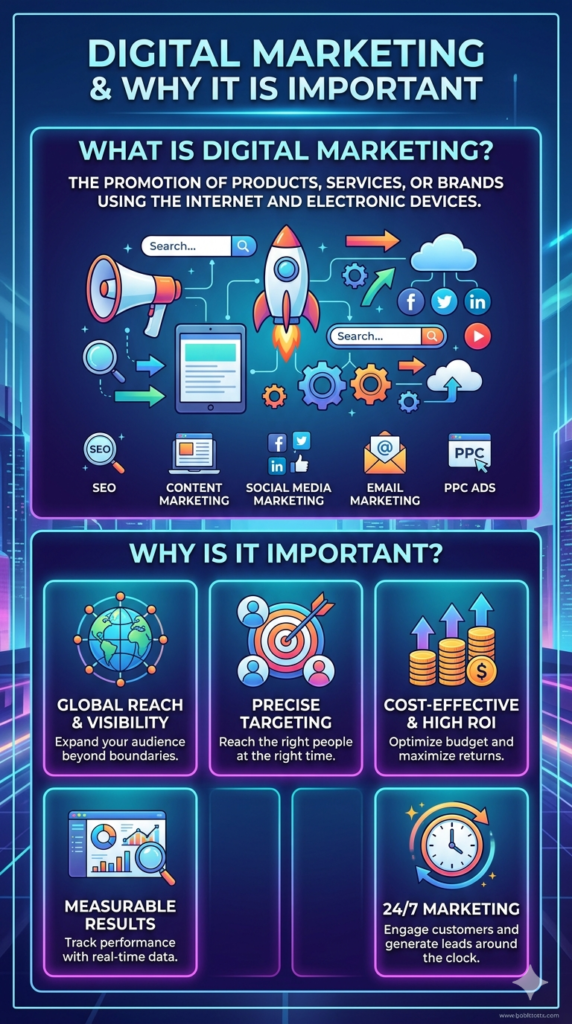
Digital marketing refers to the use of online platforms, digital technologies, and internet-based tools to promote products and services. In today’s fast-paced digital world, businesses rely heavily on digital marketing to reach their target audience, build brand awareness, and increase sales. Unlike traditional marketing methods such as newspapers or television ads, digital marketing allows businesses to connect with customers in real time through various online channels.
Digital marketing includes several key components such as Search Engine Optimization (SEO), Social Media Marketing (SMM), content marketing, email marketing, and paid advertising. Platforms like Google Ads enable businesses to run targeted advertising campaigns, while social media apps like Instagram and Facebook help brands engage directly with their audience. These tools make it easier for businesses to communicate, promote, and grow in a competitive market.
One of the biggest advantages of digital marketing is its ability to reach a global audience. With the internet accessible almost everywhere, even small businesses can expand their reach beyond local markets. This creates more opportunities for growth and customer acquisition. Additionally, digital marketing is highly cost-effective compared to traditional advertising methods. Businesses can start with a small budget and scale their campaigns based on performance.
Another important benefit is targeted marketing. Digital marketing allows businesses to focus on specific audiences based on demographics such as age, location, interests, and online behavior. This ensures that marketing efforts are directed toward people who are most likely to be interested in the product or service, increasing the chances of conversion.
Digital marketing also provides measurable results. Using analytics tools, businesses can track key performance indicators such as website traffic, click-through rates, conversions, and return on investment (ROI). This data-driven approach helps marketers understand what works and what doesn’t, allowing them to optimize their strategies for better results.
Engagement is another key factor that makes digital marketing important. Through social media platforms, blogs, and email campaigns, businesses can interact directly with their customers. This builds trust, strengthens relationships, and improves customer loyalty. For example, responding to comments or messages on social media helps create a positive brand image and encourages repeat business.
Moreover, digital marketing supports business growth by improving brand visibility. A strong online presence ensures that potential customers can easily find a business when searching for related products or services. SEO plays a crucial role in this by helping websites rank higher on search engines, making them more visible to users.
In conclusion, digital marketing is an essential tool for modern businesses. It offers a powerful way to reach a wider audience, engage with customers, and drive growth in a cost-effective and measurable manner. Whether you are a small startup or an established company, investing in digital marketing can significantly enhance your success in today’s competitive marketplace.
Why is Social Media Marketing Important for Businesses?
In today’s digital era, social media marketing has become an essential part of business success. With billions of users active daily on platforms like Instagram, Facebook, and LinkedIn, businesses have a unique opportunity to connect with their target audience, build relationships, and grow their brand online. Social media is no longer just a platform for social interaction—it is now a powerful marketing tool that drives real business results.
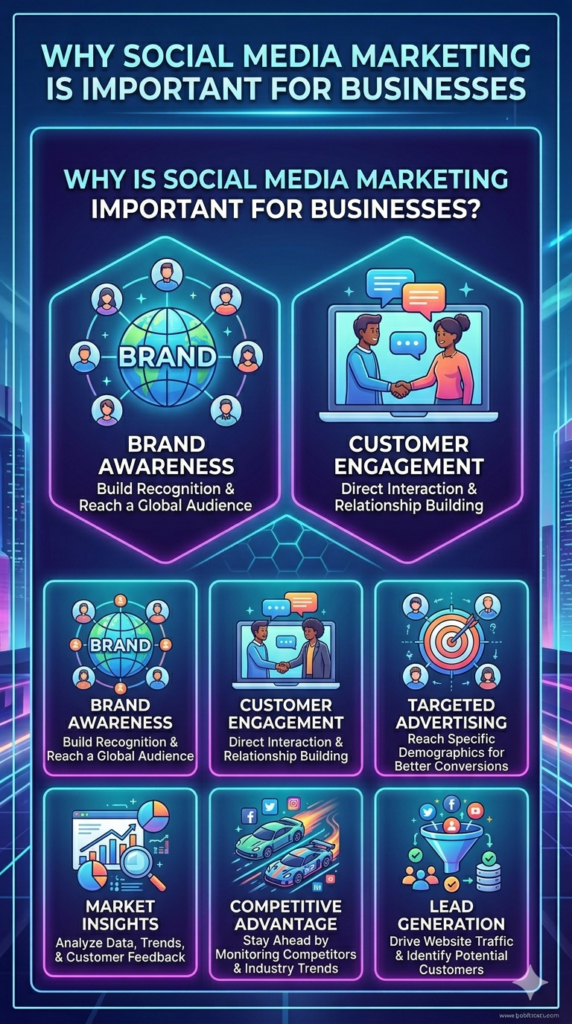
One of the biggest advantages of social media marketing is increased brand awareness. Businesses can showcase their products, services, and brand identity to a wide audience. Consistent posting of high-quality content helps brands stay visible and recognizable. Whether it’s through photos, videos, reels, or stories, businesses can create a strong impression and remain top-of-mind for potential customers.
Another important benefit is direct communication with customers. Social media allows businesses to engage with their audience in real time through comments, direct messages, and live sessions. This interaction builds trust and credibility. When customers receive quick responses to their queries or feedback, they feel valued, which strengthens their connection with the brand. Over time, this leads to improved customer loyalty and long-term relationships.
Social media marketing is also highly cost-effective, making it ideal for businesses of all sizes. Unlike traditional advertising methods such as TV or print media, social media platforms offer affordable marketing options. Businesses can start with minimal investment and still reach a large audience. Paid advertising options further enhance this by allowing brands to run targeted campaigns within a specific budget.
A key strength of social media marketing is precise audience targeting. Platforms like Facebook provide advanced targeting features that allow businesses to reach users based on age, location, interests, behavior, and more. This ensures that marketing efforts are directed toward the right people, increasing the chances of conversions and maximizing return on investment (ROI).
In addition to awareness and engagement, social media plays a crucial role in driving website traffic and sales. Businesses can share blog posts, product links, special offers, and updates that encourage users to visit their website. With effective call-to-action strategies, social media can turn followers into paying customers. Visual content, such as product images and videos, further enhances user interest and boosts conversion rates.
Another major advantage is performance tracking and analytics. Social media platforms offer built-in insights that help businesses measure the effectiveness of their campaigns. Metrics such as reach, engagement, clicks, and conversions provide valuable data. This allows marketers to analyze what works and what doesn’t, helping them optimize their strategies for better outcomes.
Social media marketing also gives businesses a competitive edge. In today’s market, customers expect brands to have an active online presence. Businesses that regularly update their profiles and engage with their audience stand out from competitors. A strong social media presence builds credibility and positions the brand as reliable and trustworthy.
Furthermore, social media supports content marketing strategies. It serves as a platform to distribute blogs, videos, infographics, and other valuable content. This not only educates the audience but also establishes the brand as an authority in its industry. High-quality content encourages sharing, which increases reach and visibility organically.
In conclusion, social media marketing is a powerful and essential tool for businesses in the modern digital landscape. It helps increase brand awareness, build strong customer relationships, drive traffic, and boost sales—all while being cost-effective and measurable. By effectively using platforms like Instagram, Facebook, and LinkedIn, businesses can achieve sustainable growth and long-term success in an increasingly competitive market.
What is a Digital Marketing Strategy?
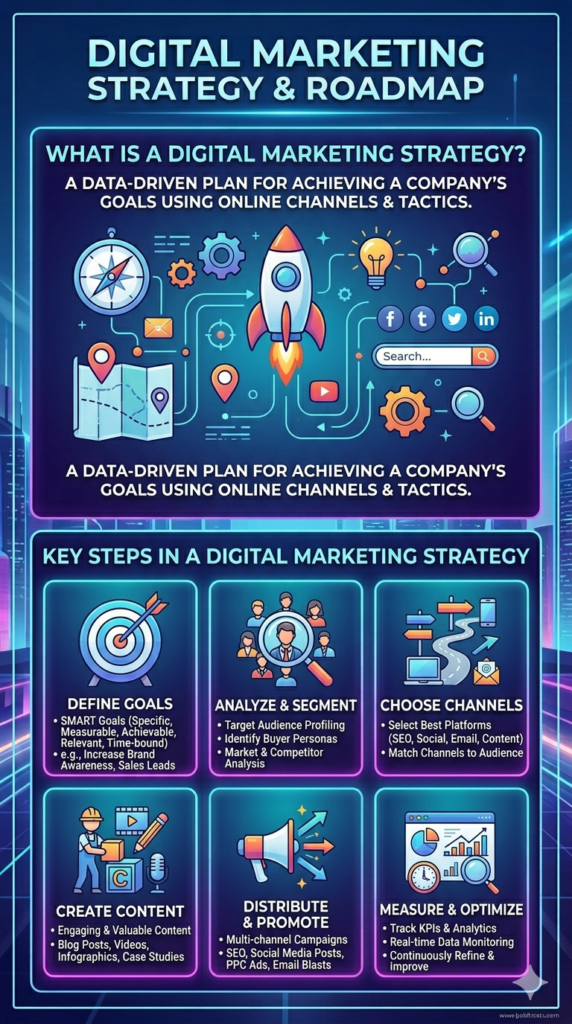
In today’s competitive online landscape, having a clear and effective digital marketing strategy is essential for business success. A digital marketing strategy is a structured plan that outlines how a business will use digital channels, tools, and techniques to achieve its marketing goals. It helps organizations promote their products or services, connect with their target audience, and drive measurable results through online platforms.
A digital marketing strategy acts as a roadmap for all online marketing activities. Instead of posting content randomly or running unplanned ads, businesses follow a well-defined plan that ensures every action contributes toward a specific objective. These objectives can include increasing website traffic, generating leads, improving brand awareness, or boosting sales.
One of the most important elements of a digital marketing strategy is goal setting. Businesses must clearly define what they want to achieve. For example, a company may aim to increase its website visitors by 50% in six months or generate a certain number of leads each month. Clear goals provide direction and make it easier to measure success.
Another key component is understanding the target audience. A successful strategy focuses on identifying who the ideal customers are, what their needs and preferences are, and how they behave online. By analyzing factors such as demographics, interests, and online behavior, businesses can create personalized campaigns that resonate with their audience and improve engagement.
A strong digital marketing strategy also includes content planning. Content plays a major role in attracting and engaging users. This can include blog posts, videos, social media content, infographics, and email newsletters. High-quality and relevant content helps build trust, educate customers, and position the brand as an authority in its industry. Additionally, content should be optimized for search engines to improve visibility and rankings.
The selection of the right digital channels is another crucial aspect. Businesses need to decide where to focus their efforts based on their audience and goals. Search Engine Optimization (SEO) helps improve organic visibility on search engines, while paid advertising platforms like Google Ads provide immediate visibility and traffic. Social media platforms such as Instagram and Facebook enable businesses to connect with users, share content, and build relationships.
Another important element is budget planning. A digital marketing strategy outlines how much to spend on different channels and campaigns. Whether it’s investing in paid ads, content creation, or social media promotions, having a clear budget ensures that resources are used efficiently.
Performance tracking and analysis are essential for the success of any digital marketing strategy. Using analytics tools, businesses can measure key performance indicators such as website traffic, click-through rates, engagement levels, conversions, and return on investment (ROI). This data-driven approach helps marketers understand what works and what doesn’t, allowing them to optimize campaigns for better results.
Consistency is also a major benefit of having a digital marketing strategy. It ensures that all marketing efforts are aligned with the brand’s message and goals. Regular posting, consistent branding, and continuous optimization help build a strong and recognizable online presence.
Moreover, a digital marketing strategy provides a competitive advantage. In a crowded digital space, businesses that plan and execute their strategies effectively are more likely to stand out and attract customers. It also helps in adapting to changing trends and technologies, ensuring long-term growth.
In conclusion, a digital marketing strategy is a vital tool for businesses aiming to succeed in the digital world. It provides direction, improves efficiency, and ensures that all marketing activities are goal-oriented and measurable. By leveraging tools like Google Ads and platforms such as Instagram and Facebook, businesses can effectively reach their audience, build strong relationships, and achieve sustainable growth in today’s digital marketplace.
